-
Colleges
-
Graduate School
- Graduate School
- Scout Grad School Search Find and compare grad schools based on your preferences, goals and academic interests.
- $5,000 Grad School No Essay Scholarship† Enter to win our $5,000 no essay grad school scholarship in 2 min or less.
- Graduate Degrees Explore graduate degree options that fit your goals.
- Paying for Graduate School Understand costs and explore ways to pay for grad school.
-
Scholarships
- Scholarships
- $2,000 No Essay Scholarship† Enter to win our no essay $2,000 college scholarship in 2 minutes or less.
- Scholly Scholarships Easily find and sort through thousands of college scholarships for free.
- Scholarships for High School Seniors Explore scholarships for high school seniors and get tips on how to apply.
- Scholly Easy Apply Scholarships† Apply for up to $18,000 in scholarships each month with just one form.
- $5,000 Grad School No Essay Scholarship† Enter to win our $5,000 no essay grad school scholarship in 2 min or less.
-
Financial aid
- Financial Aid Grants, work-study, and federal student loans can all be part of your financial aid package.
- FAFSA® Guide Learn how to answer the 2027-28 FAFSA® questions like a pro.
- Financial Aid Offers Compare financial aid offers to determine the most affordable schools for you and your family.
- College Grants Learn more about federal and state grants and how to apply.
- Federal Pell Grants Discover what a Pell Grant is, who is eligible, and how to apply.
- Financial Aid Resources Get expert guidance on maximizing your financial aid options to make education more affordable.
-
Pay for School
- Sallie Mae® Student Loans
- Private Student Loans Find a private student loan designed to fit your needs.
- Undergrad Student Loan For college students earning a bachelor's or associate's degree.
- Graduate Student Loans Choose the right loan for your graduate degree or post-graduate studies.
- Career Training Loan For students taking professional training or certificate courses.
- Student Loan Resources Everything you need to navigate student loans with confidence.

Students are navigating significant changes in how they pay for school this year, including new federal borrowing rules. In August 2026, Sallie surveyed 299 graduate students about paying for the 2026–2027 academic year, alongside 601 undergraduates and 571 parents, to understand how their experiences compared.
Graduate students surveyed were more likely than undergraduates to say the loan changes had affected them. Most felt confident about how they would pay for school, with 36% extremely confident and 26% very confident. Still, many also wanted clearer information about their aid, including better explanations of their aid packages and a checklist of next steps.
Alongside the findings, Sallie shares resources to help students understand the loan changes and explore ways to pay for grad school.
What changed for students in 2026–2027
- Grad PLUS loans are no longer available to new borrowers as of July 1, 2026.
- Under the new rules, graduate students can borrow up to $20,500 annually in Direct Unsubsidized Loans, with a $100,000 total borrowing limit for graduate study. Qualifying professional students have higher limits of $50,000 annually and $200,000 lifetime.
- A separate $257,500 lifetime cap includes federal loans for undergraduate, graduate, and professional study, including previous Grad PLUS loans. It excludes Parent PLUS loans.
- Parent PLUS borrowing is now capped at $20,000 annually and $65,000 overall per dependent student, with temporary exceptions for eligible families.
Key takeaways
- Graduate students were more than twice as likely as undergraduates to say the new federal loan rules affected them (57% vs. 26%).
- 36% of graduate students were extremely confident, and 26% were very confident that they knew how they would pay for school this year.
- 47% of returning graduate students said paying for school was harder this year than last, compared to 29% of returning undergraduates.
- Nearly half of graduate students (48%) reported they didn't have all the information they needed from their school to pay for school, and 28% had missed an important financial aid communication.
- More than 1 in 4 graduate students (27%) delayed a decision about paying for school, and affordability drove 63% of those delays.
Knowing what changed in federal borrowing
Federal student loan rules changed for the 2026–2027 academic year, giving students a new set of limits and options to understand. Graduate students surveyed were more likely than undergraduates to report being affected by the changes.
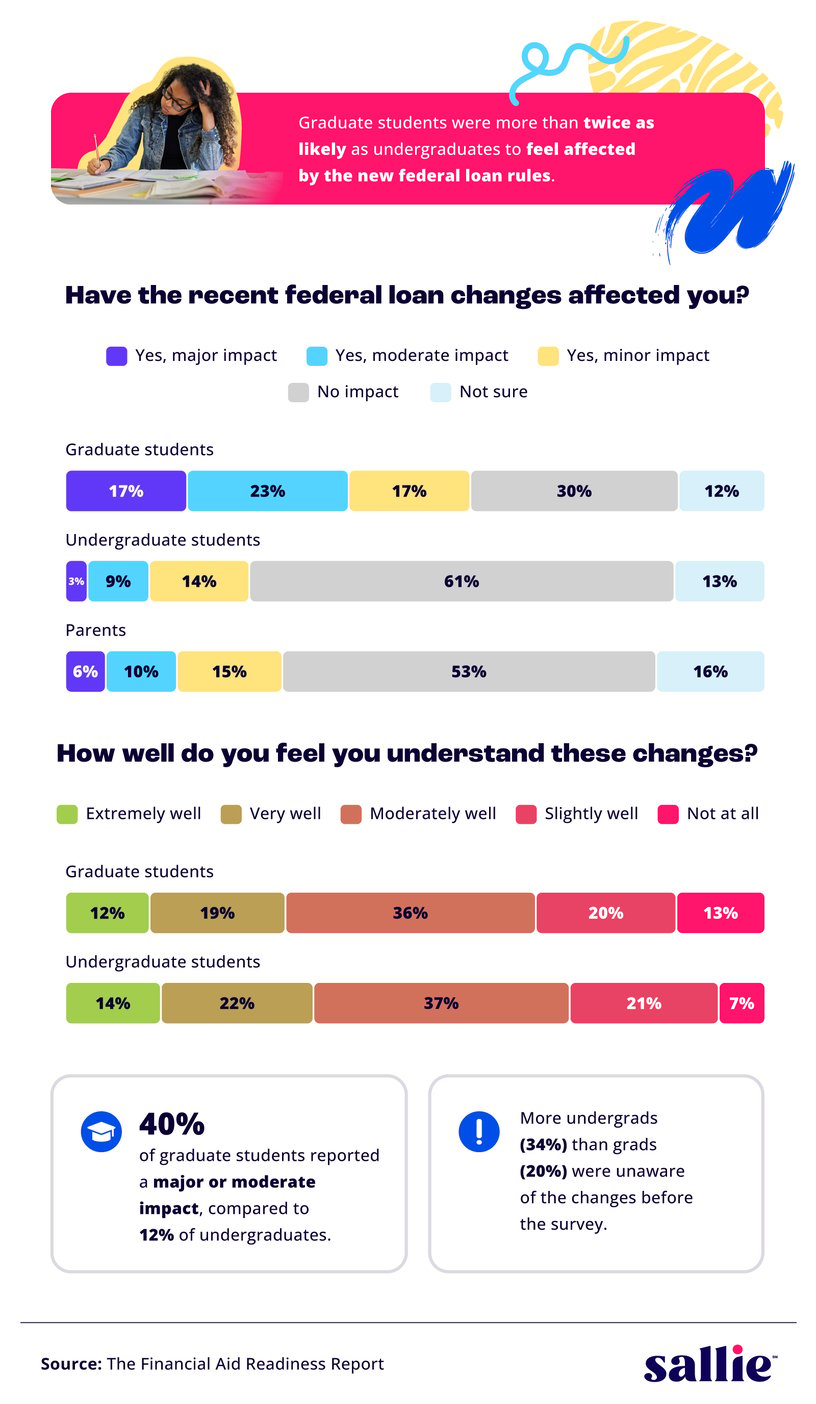
Graduate students were more than twice as likely as undergraduates to say federal loan changes had affected them (57% vs. 26%). About 2 in 3 incoming graduate students (66%) and 55% of returning ones reported being impacted.
Only 30% of graduate students said the changes had no impact on them, compared with 61% of undergraduates. Another 12% of graduates weren't sure whether the changes affected them.
Graduate students were also more likely to report a major impact than undergraduates (17% vs. 3%) and were more aware of the changes before they took effect (80% vs. 66%). Most graduate students understood the changes, but 33% said they understood them only slightly or not at all.
Understanding the aid offer and what comes next
Knowing what aid is available is only part of planning for graduate school. Students also need a clear explanation of what they're receiving, what they'll owe, and what steps come next.
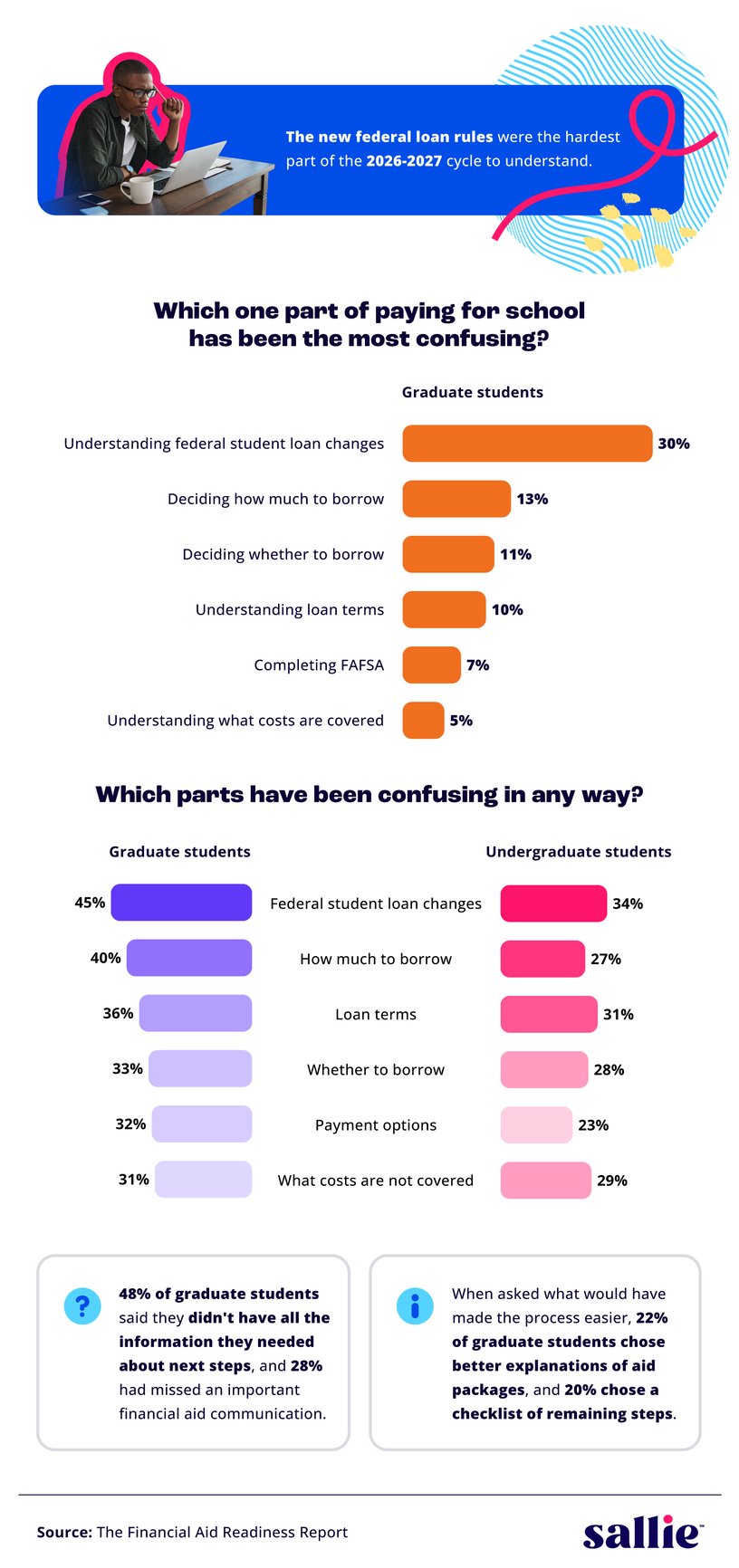
Nearly half of graduate students (48%) said they had only some or none of the information they needed about the next steps to take to pay for school. At the time of the August survey, 28% had already missed or overlooked an important financial aid communication.
When students could select every part of the financial aid process they found confusing, 45% of graduate students and 34% of undergrads chose federal student loan changes. Deciding how much to borrow was also a source of confusion for 40% of graduates and 27% of undergraduates.
In a separate question, students were asked to single out the most confusing part of all. Among graduate students, 30% pointed to federal student loan changes, again making this the most common response.
When asked what would have made the process easier, 22% of graduate students chose better explanations of aid packages, and 20% chose a checklist of remaining steps.
Comparing this year with last
For returning students, comparing how paying for school feels this year with last year can make changes easier to see.
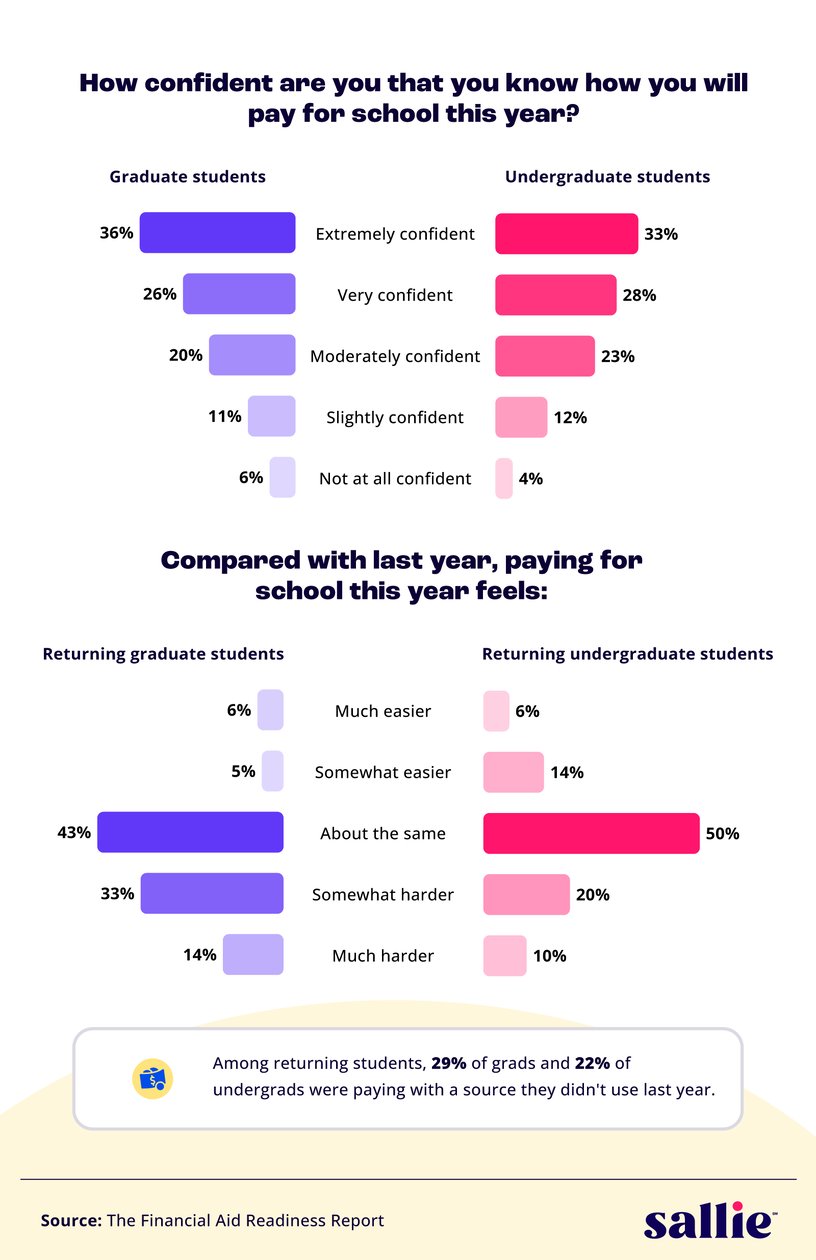
Many graduate students felt good about their financial plans, with 62% saying they felt very or extremely confident about how they'd pay for school this year. Another 20% were moderately confident, and just 17% were slightly or not at all confident.
Nearly half of returning graduate students (47%) said paying for school was harder than it had been the previous year, compared with 29% of returning undergraduates. Other returning graduate students (43%) and undergrads (50%) said paying for school felt about the same this school year as last year.
About 3 in 10 returning graduate students (29%) and 22% of returning undergraduates used a funding source they hadn't used the previous year. Among returning graduate students who added a new funding source, their own income or savings was the source they relied on most often (34%), followed by scholarships (16%) and private student loans (14%).
Understanding the options for covering costs
Graduate students surveyed were less likely than undergraduates to consider help from a parent when paying for school. Their responses included several potential funding sources, from scholarships to their own income and savings.
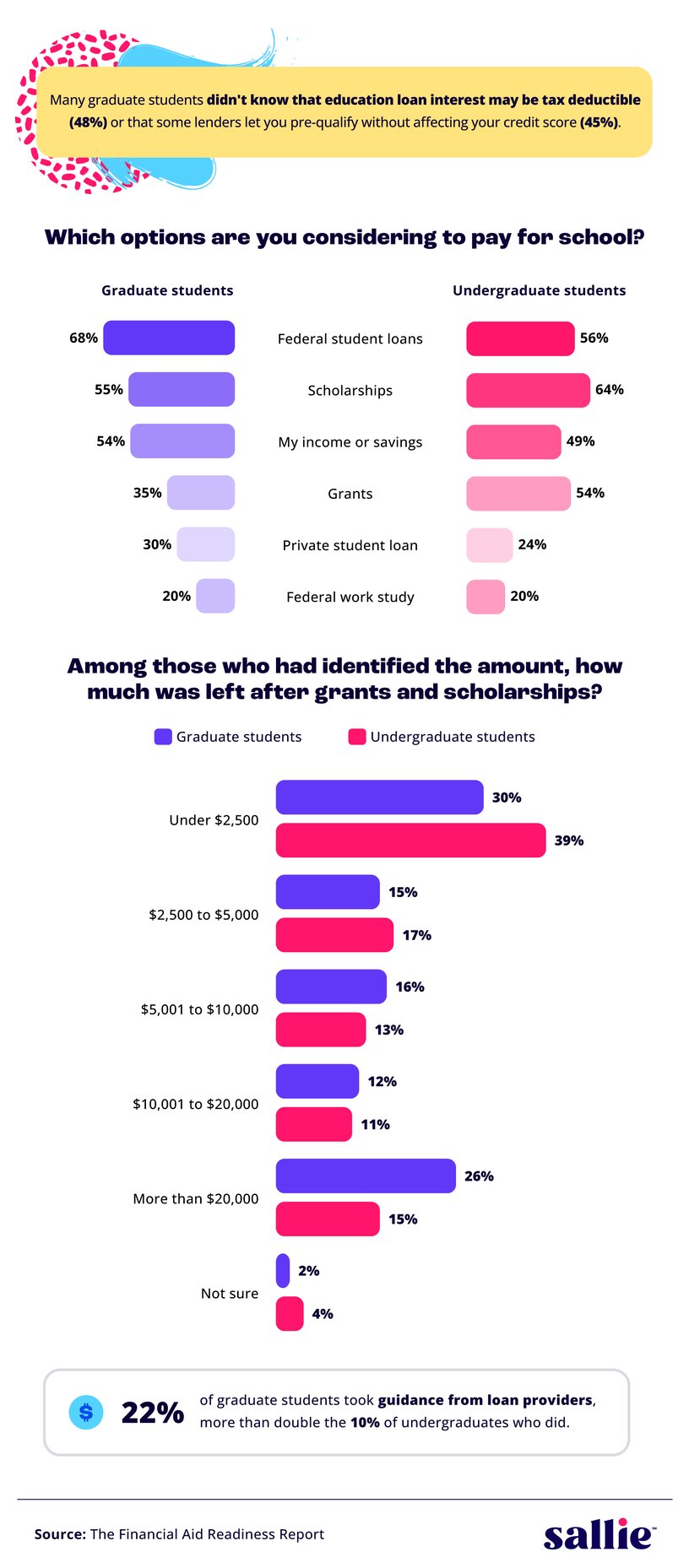
Federal student loans were the most commonly considered way to pay for school among graduate students (68%), followed by graduate scholarships (55%). More than half (54%) were considering using their own income or savings, while 14% expected help from a parent. By comparison, 28% of undergraduates were considering help from their parents.
When they needed more information about paying for school, graduate students were most likely to turn to online research (58%) and their school's financial aid office (57%). About 1 in 5 (22%) also identified a loan provider as a source of guidance.
Knowing what's left to pay before deciding
Graduate school comes with plenty of decisions, and some are difficult to make until students know exactly what they'll need to pay.
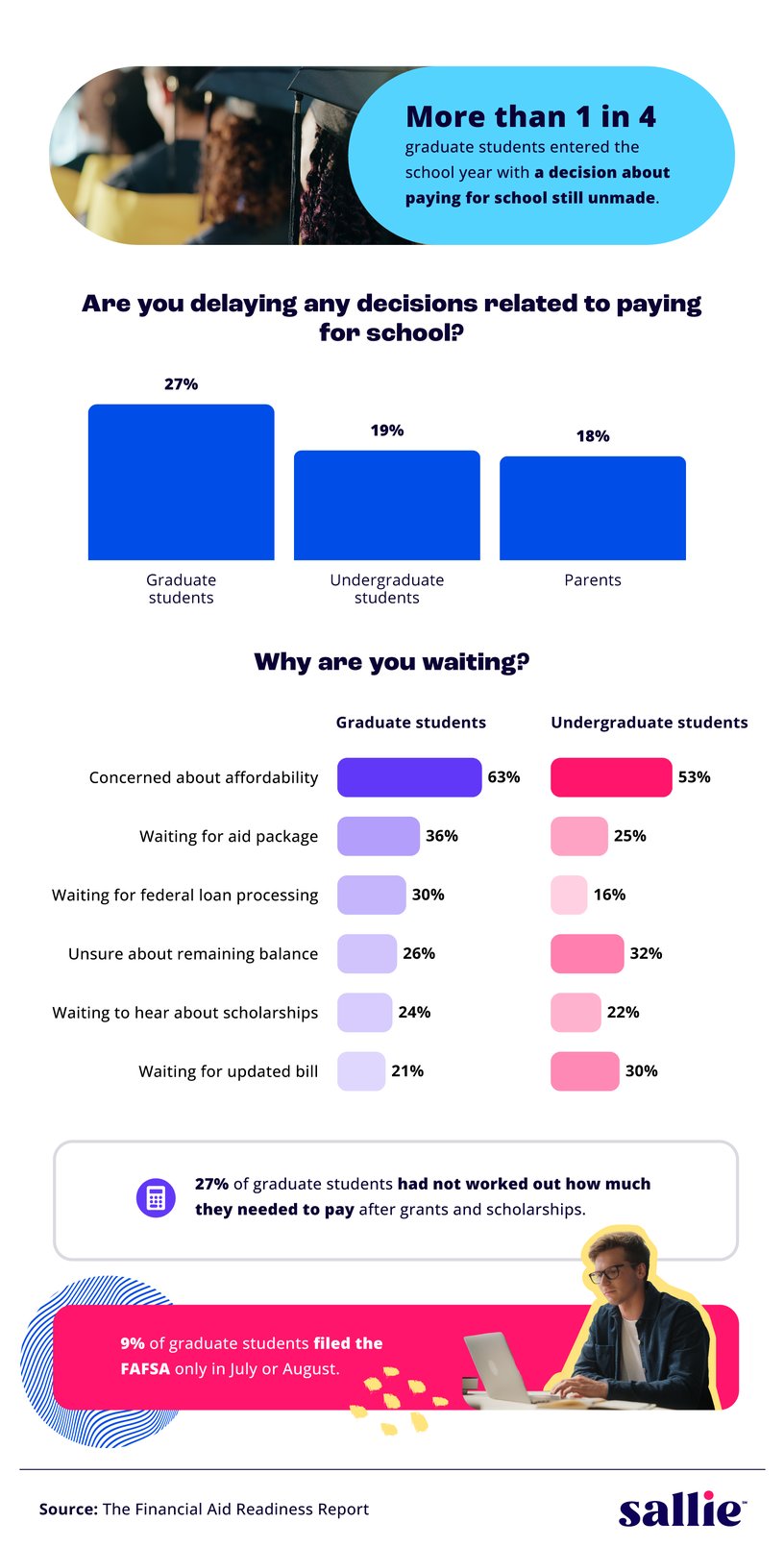
More than 1 in 4 graduate students (27%) had delayed a decision about paying for school. Affordability was the most common reason, cited by 63% of graduate students who were delaying a decision. The next most common reasons were waiting for an aid package (36%) or federal loan processing (30%). Among all graduate students, 27% hadn't determined how much they owed after grants and scholarships at the time of the survey. A late start also affected some: 9% filed the FAFSA® in July or August, and 7% were unable to say when they filed.
Taking steps to manage the cost
Paying for graduate school caused a mix of emotions. Students who experienced only negative feelings took steps to manage costs and find the information they needed.
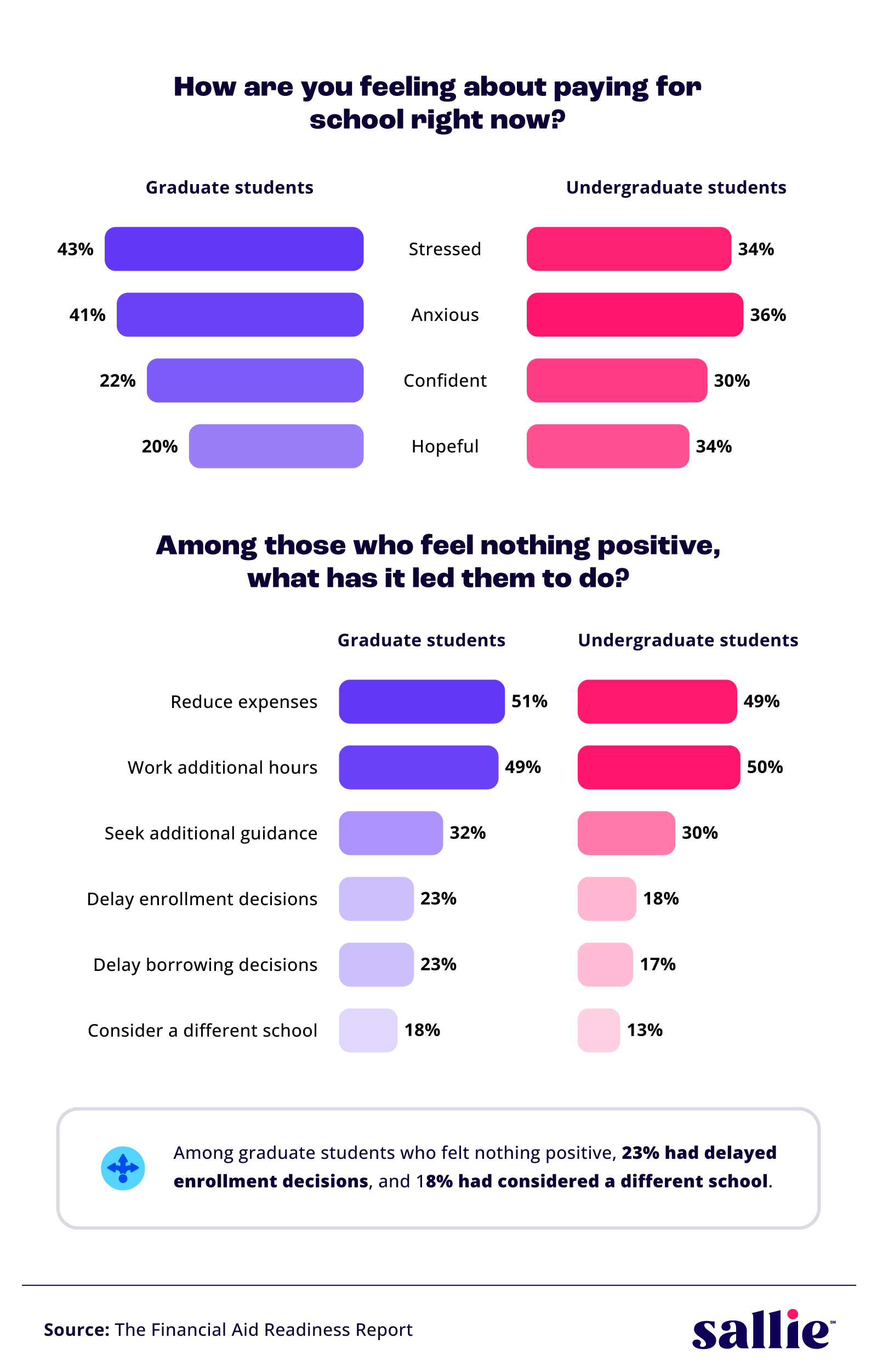
Stress was common: 43% of graduate students reported feeling stressed about paying for school, and 41% felt anxious. At the same time, 22% felt confident, and 20% felt hopeful about their plans.
Graduate students also reported taking steps to manage school costs. Among those who reported only negative feelings about paying for school, 51% were reducing expenses, 49% were working additional hours, and 32% had sought more guidance.
A clearer plan can make graduate school easier to finance
Paying for graduate school starts with understanding what you'll owe and which resources are available to help cover it. Students should carefully review their financial aid package and calculate what remains after grants, scholarships, and savings. If you still have a balance, understand your borrowing options before deciding how to cover the rest.
Sallie's graduate school guide can help students make sense of the process, from finding graduate school scholarships and understanding federal PLUS loan changes to comparing federal and private student loan options. With clear information, students can confidently evaluate their choices and build a plan for funding graduate school.
Methodology
A survey conducted by Fractl on behalf of Sallie in August 2026 surveyed 299 graduate students about paying for the 2026–2027 academic year. Every respondent had filed the FAFSA® and was at least somewhat involved in deciding how school gets paid for. By enrollment stage, 71% of those surveyed were returning graduate students, and 29% were incoming. By involvement in paying, 74% were extremely involved, 20% very involved, and 7% somewhat involved. Among respondents, 44% were the first in their family to attend a four-year college.
Undergraduate and parent comparisons come from companion surveys fielded at the same time, with 601 undergraduate students and 571 parents of undergraduate students who met the same requirements and answered the same questionnaire apart from group-specific sections.
Respondents were recruited through an online panel and were not weighted to any population, so findings describe these respondents rather than all graduate students. Percentages are rounded to the nearest whole number, so totals may not equal the sum of their parts and may not add to 100.
About Sallie
Sallie is an education-solutions company that helps guide students and families through the entire higher-education journey with trusted tools, free-money-first support, and clear guidance from day one to done. Sallie helps students find scholarships, navigate financial aid, plan for college with Scout, and feel more confident about the steps ahead.
Fair use statement
The findings in this report may be shared for noncommercial purposes. If you reference this research, please include a link back to this page so readers can review the full study and methodology.