-
Colleges
-
Graduate School
- Graduate School
- Scout Grad School Search Find and compare grad schools based on your preferences, goals and academic interests.
- $5,000 Grad School No Essay Scholarship† Enter to win our $5,000 no essay grad school scholarship in 2 min or less.
- Graduate Degrees Explore graduate degree options that fit your goals.
- Paying for Graduate School Understand costs and explore ways to pay for grad school.
-
Scholarships
- Scholarships
- $2,000 No Essay Scholarship† Enter to win our no essay $2,000 college scholarship in 2 minutes or less.
- Scholly Scholarships Easily find and sort through thousands of college scholarships for free.
- Scholarships for High School Seniors Explore scholarships for high school seniors and get tips on how to apply.
- Scholly Easy Apply Scholarships† Apply for up to $18,000 in scholarships each month with just one form.
- $5,000 Grad School No Essay Scholarship† Enter to win our $5,000 no essay grad school scholarship in 2 min or less.
-
Financial aid
- Financial Aid Grants, work-study, and federal student loans can all be part of your financial aid package.
- FAFSA® Guide Learn how to answer the 2027-28 FAFSA® questions like a pro.
- Financial Aid Offers Compare financial aid offers to determine the most affordable schools for you and your family.
- College Grants Learn more about federal and state grants and how to apply.
- Federal Pell Grants Discover what a Pell Grant is, who is eligible, and how to apply.
- Financial Aid Resources Get expert guidance on maximizing your financial aid options to make education more affordable.
-
Pay for School
- Sallie Mae® Student Loans
- Private Student Loans Find a private student loan designed to fit your needs.
- Undergrad Student Loan For college students earning a bachelor's or associate's degree.
- Graduate Student Loans Choose the right loan for your graduate degree or post-graduate studies.
- Career Training Loan For students taking professional training or certificate courses.
- Student Loan Resources Everything you need to navigate student loans with confidence.

As families prepared to pay for college this year, most students and parents surveyed felt confident they knew how they would cover the cost. Many had also pursued scholarships or state aid. Alongside that preparation, some were working to confirm their final costs, understand their aid, and coordinate next steps.
In August 2026, Sallie surveyed 1,172 U.S. students and families, including 601 undergraduate students and 571 parents of undergraduates, about their readiness to pay for the school year now underway. The survey looked at whether families had the information they needed, how clearly payment and financial aid details were reaching students and parents, and which parts of the process caused the most confusion.
This year also brought new federal student loan rules, including changes to Parent PLUS loans, giving families additional details to consider. Their responses show where clearer information could help families plan how to pay for college.
Key takeaways
- 57% of undergraduates and parents surveyed were confident they knew how they would pay for school this year.
- 54% had pursued scholarships offered outside of their school, and 40% had applied for state aid.
- 86% found at least one part of paying for college confusing, with federal student loan changes selected most often.
- 46% of undergraduate students and parents didn't have all the information they needed to pay for college, while 21% missed an important financial aid communication.
- Respondents most often identified a checklist of remaining steps (22%) or better explanations of aid packages (21%) as the additional resource that would have helped them most.
Most students and parents felt confident about covering their costs
A clear picture of college costs gives families a starting point for planning. Most respondents felt confident about how they would pay for school, while some were waiting on bills, aid offers, or other details to complete the picture.
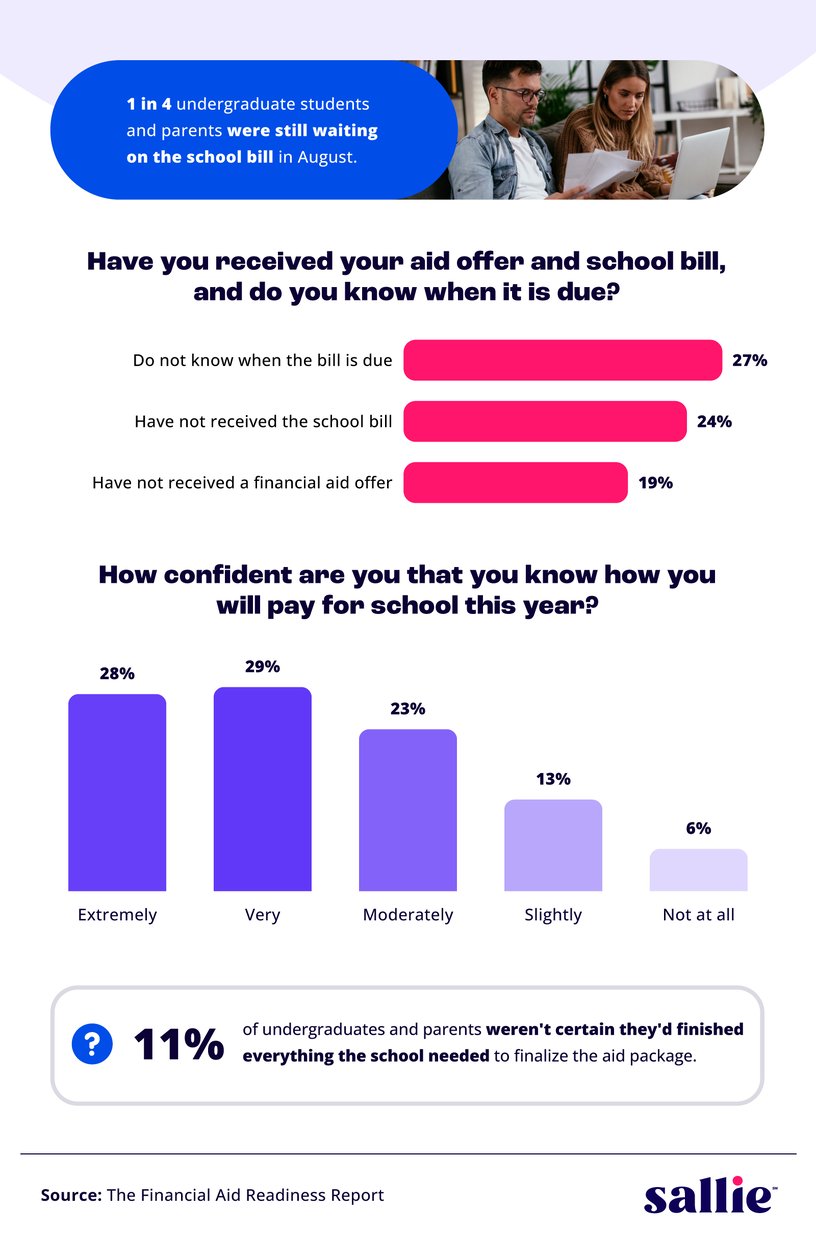
A majority of students and parents (57%) were confident they knew how they would pay for school this year, while others were moderately (23%), slightly (13%), or not at all sure (6%).
Some respondents were also missing information at the time of the survey. They didn't know when the bill was due (27%), hadn't received a bill (24%), or didn't yet have a financial aid offer (19%). Incoming undergraduate students and parents (32%) were more likely to be waiting on a school bill than returning ones (22%).
Even after those pieces arrived, some respondents hadn't worked out their remaining balance. About 1 in 3 students and parents (32%) hadn't identified what they owed after grants and scholarships were applied. More than 1 in 10 (11%) also weren't certain that they had completed everything the school needed to finalize the aid package.
Clear next steps can help families plan together
Paying for college often involves coordination between students and parents. Respondents described how financial aid information reached them and identified resources that could make their next steps clearer.
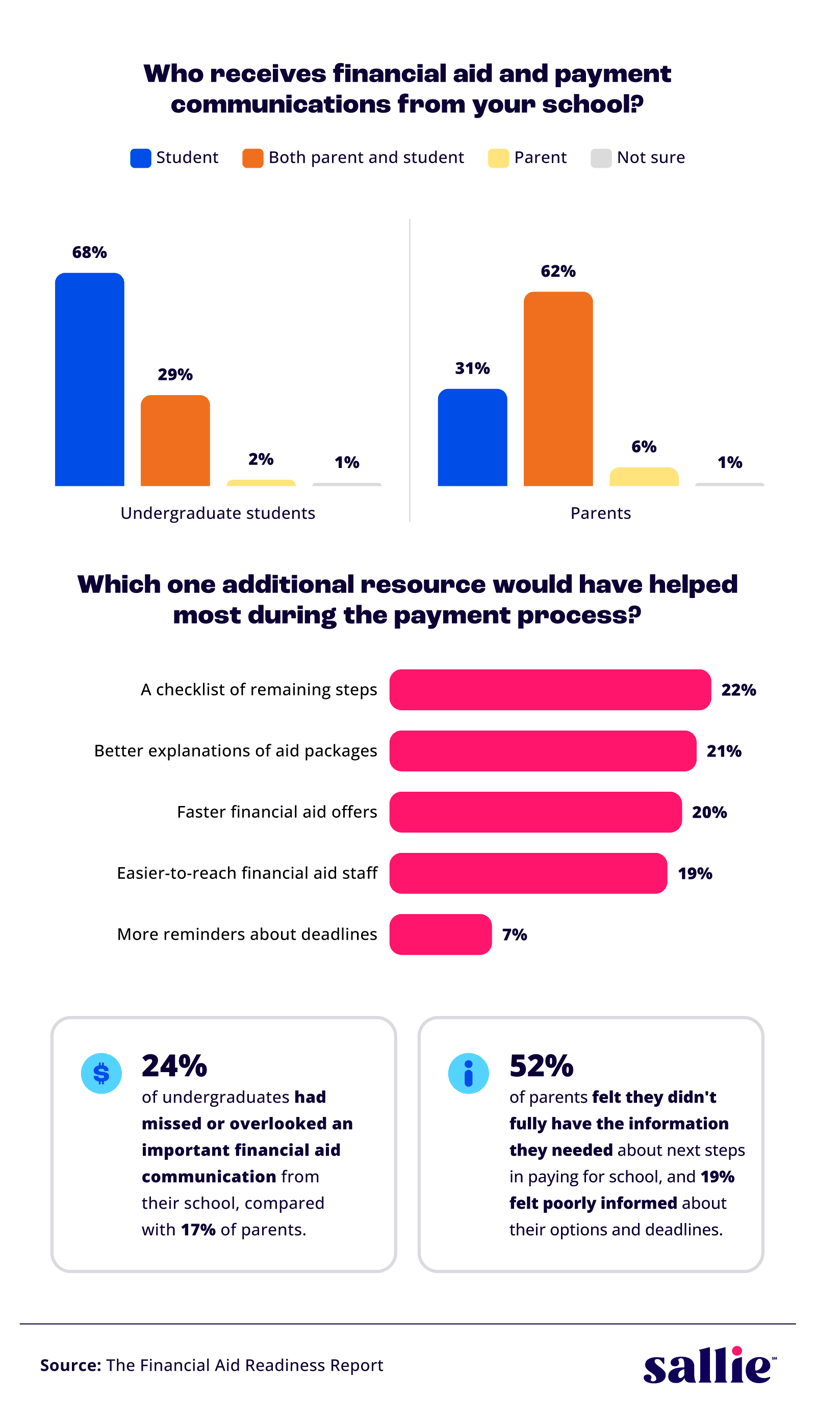
Parents and undergraduates described the communication process between them and the school differently. While 62% of parents said both they and their child received financial aid and payment information, just 29% of students said the same. Instead, 68% of students said those communications only went to the student.
Nearly half of parents (48%) said they fully had the information they needed about next steps, while 44% said they only somewhat did, and 8% said they didn't. Across students and parents surveyed, 46% didn't have all the information they needed to pay for college, and 21% had missed an important financial aid communication.
Students and parents were looking for a range of resources to help improve the process. They said the following would have helped them the most:
- A checklist of remaining steps (22%)
- Better explanations of aid packages (21%)
- Faster aid offers (20%)
- Easier-to-reach financial aid staff (19%)
About half of the respondents (52%) had been advised to wait until the aid package was finalized before considering private loans. Another 31% had not received that advice, and 17% couldn't recall. Before applying for loans, the financial aid package should be evaluated first in order to determine what balance may remain.
Students and parents were working to understand changing rules
As they considered their options, families had questions about the payment process. Overall, 86% of students and parents said at least one part of paying for college was confusing. When they could select every part that gave them trouble, respondents most often chose federal student loan changes, at 35%.
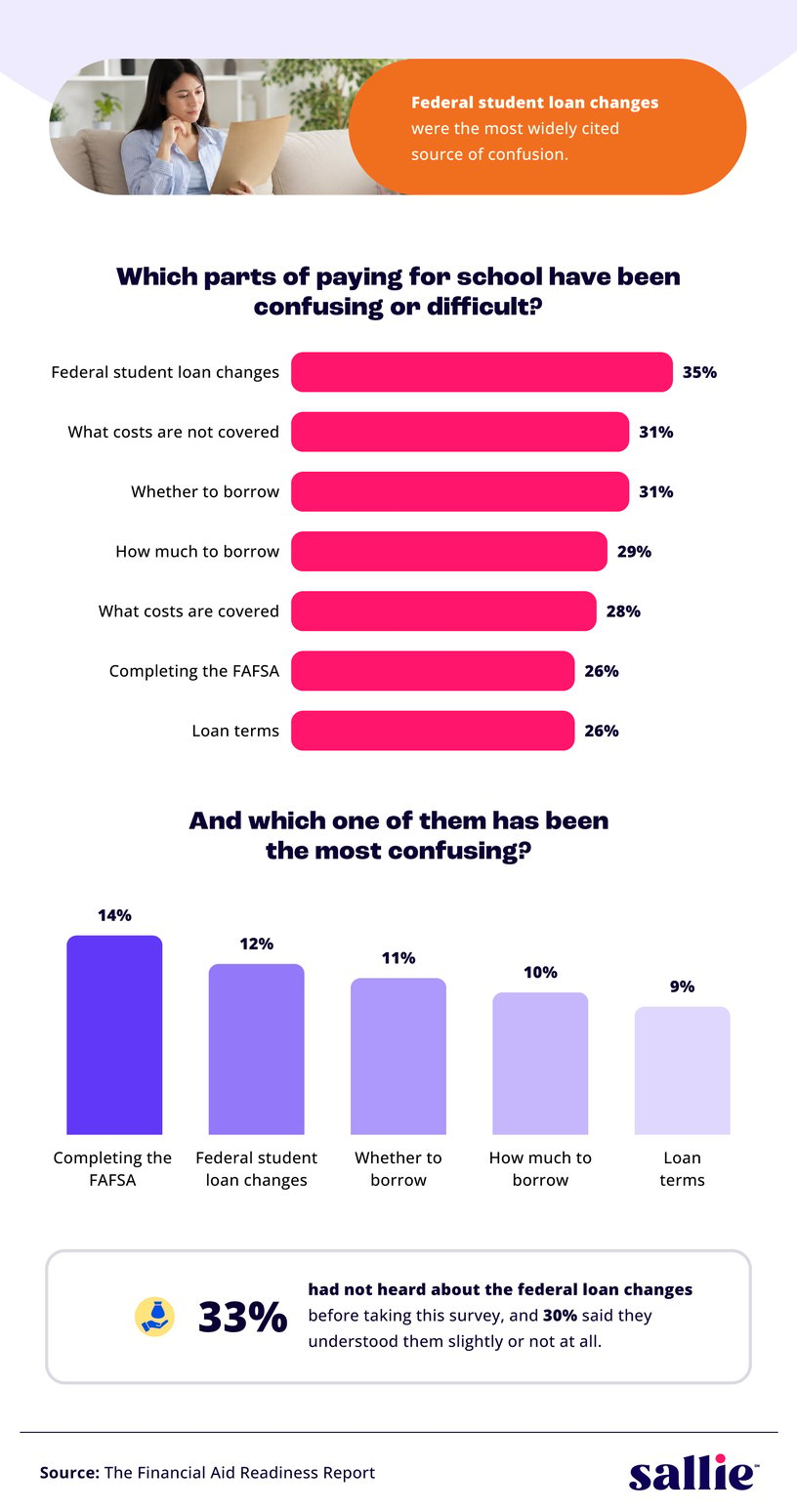
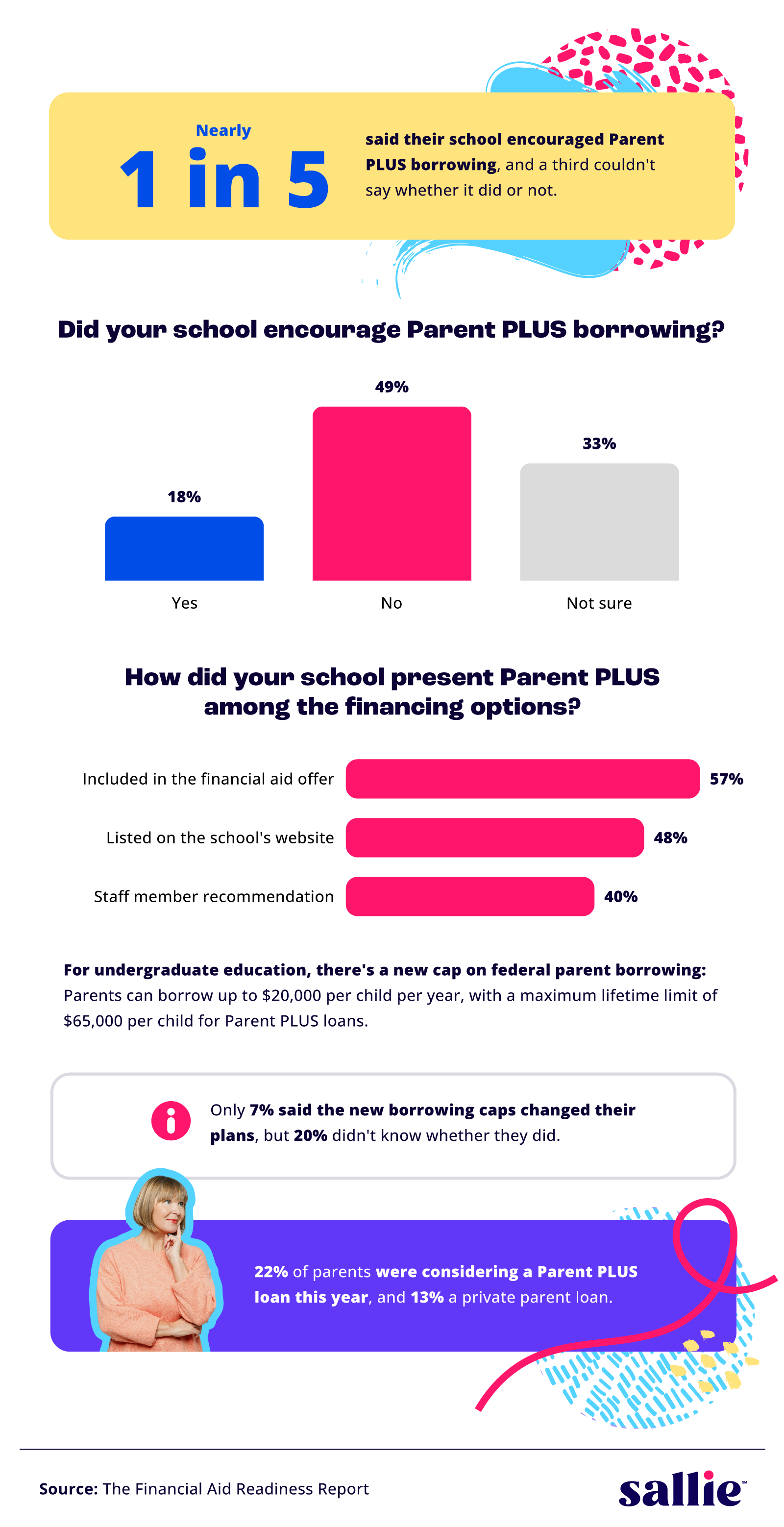
When asked to choose the single most confusing part of paying for school, students and parents most often pointed to completing the FAFSA® (14%). Federal student loan changes (12%), whether to borrow money for school (11%), and how much to borrow (10%) all followed closely. Among parents, 20% said the new Parent PLUS loan rules, which took effect on July 1, 2026, were confusing.
Students and parents explored several ways to help cover college costs. More than half (54%) had pursued outside scholarships offered by organizations other than their college or university, and 40% had applied for state aid.
Paying for college can affect more than the budget
Students and parents reported a mix of feelings about paying for college. One-third (33%) felt hopeful, and 29% felt confident, alongside respondents who felt stressed (37%) or anxious (36%).
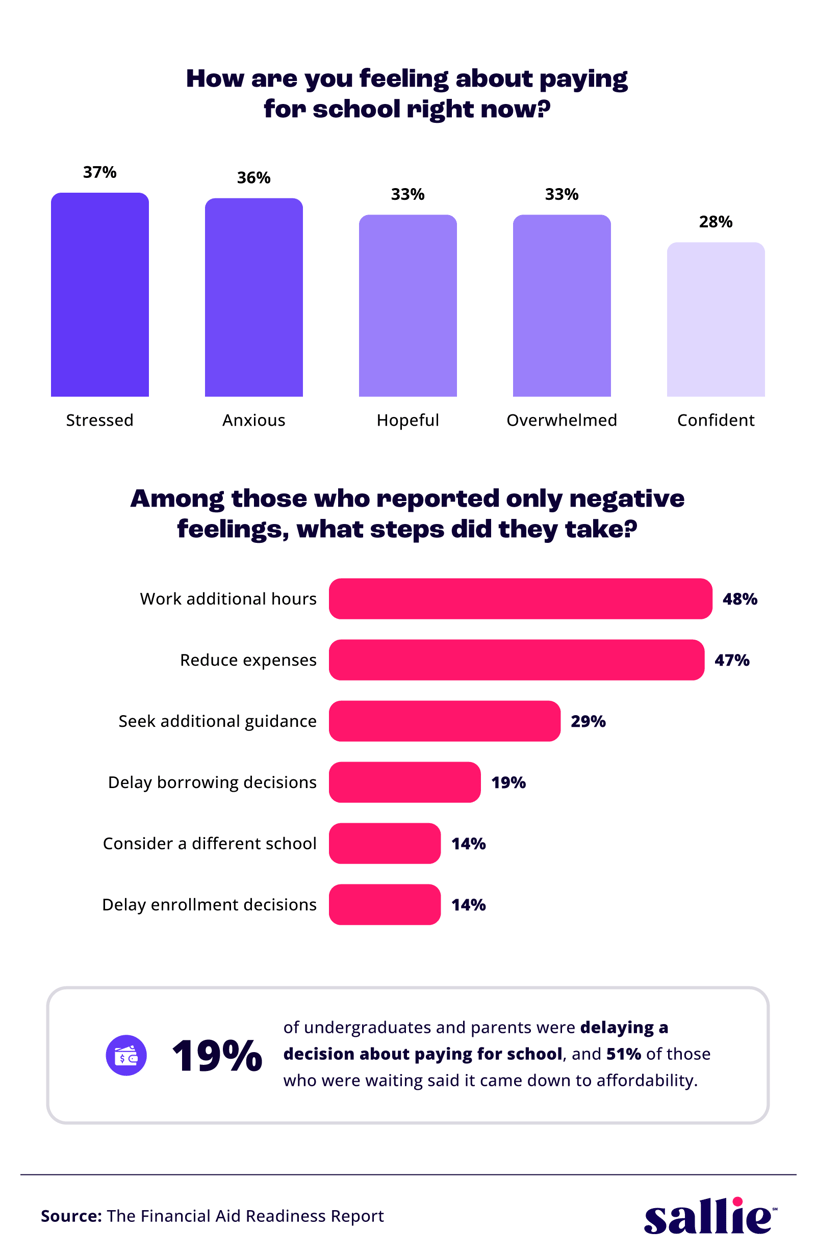
Even among respondents who reported no positive feelings about paying for school, many took steps to address their concerns. Nearly half worked additional hours (48%) or reduced other expenses (47%), and 29% sought additional guidance about affording college.
For some, affordability made decisions harder to finalize. Overall, 19% of students and parents were delaying a decision about paying for school. Among them, 51% cited affordability, 32% didn't know what they owed, and 30% were waiting on an aid package.
A clearer plan starts with the right information
Feeling prepared to pay for college starts with having a clear picture of what you owe, what aid is available, and which steps still need attention. That can be especially important this year and upcoming semesters as families adjust to federal student loan changes and make decisions about how to cover any remaining costs.
Sallie offers resources to help students and families work through those decisions, including a FAFSA® guide for help completing the FAFSA®, a student loan guide to understand how student loans work and what repayment may look like, and additional financial aid resources for wherever students may be in the process. Families looking for more ways to reduce out-of-pocket costs can also use Scholly Scholarships to search for scholarship opportunities.
Methodology
A survey conducted by Fractl on behalf of Sallie in August 2026 surveyed 1,172 people paying for an undergraduate education, including 601 undergraduate students and 571 parents of undergraduate students. Every respondent had filed the FAFSA® for the 2026–2027 academic year and was at least somewhat involved in deciding how school gets paid for.
By enrollment stage, 89% of undergraduate students were returning, and 11% were incoming, while 56% of parents had a returning student and 44% had an incoming one. By involvement in paying, 50% were extremely involved, 31% very involved, and 19% somewhat involved. Among the undergraduate students, 50% were the first in their family to attend a four-year college.
About Sallie
Sallie is an education-solutions company that helps guide students and families through the entire higher-education journey with trusted tools, free-money-first support, and clear guidance from day one to done. Sallie helps students find scholarships, navigate financial aid, plan for college with Scout, and feel more confident about the steps ahead.
Fair use statement
The findings in this report may be shared for noncommercial purposes. If you reference this research, please include a link back to this page so readers can review the full study and methodology.