-
Colleges
-
Graduate School
- Graduate School
- Scout Grad School Search Find and compare grad schools based on your preferences, goals and academic interests.
- $5,000 Grad School No Essay Scholarship† Enter to win our $5,000 no essay grad school scholarship in 2 min or less.
- Graduate Degrees Explore graduate degree options that fit your goals.
- Paying for Graduate School Understand costs and explore ways to pay for grad school.
-
Scholarships
- Scholarships
- $2,000 No Essay Scholarship† Enter to win our no essay $2,000 college scholarship in 2 minutes or less.
- Scholly Scholarships Easily find and sort through thousands of college scholarships for free.
- Scholarships for High School Seniors Explore scholarships for high school seniors and get tips on how to apply.
- Scholly Easy Apply Scholarships† Apply for up to $18,000 in scholarships each month with just one form.
- $5,000 Grad School No Essay Scholarship† Enter to win our $5,000 no essay grad school scholarship in 2 min or less.
-
Financial aid
- Financial Aid Grants, work-study, and federal student loans can all be part of your financial aid package.
- FAFSA® Guide Learn how to answer the 2027-28 FAFSA® questions like a pro.
- Financial Aid Offers Compare financial aid offers to determine the most affordable schools for you and your family.
- College Grants Learn more about federal and state grants and how to apply.
- Federal Pell Grants Discover what a Pell Grant is, who is eligible, and how to apply.
- Financial Aid Resources Get expert guidance on maximizing your financial aid options to make education more affordable.
-
Pay for School
- Sallie Mae® Student Loans
- Private Student Loans Find a private student loan designed to fit your needs.
- Undergrad Student Loan For college students earning a bachelor's or associate's degree.
- Graduate Student Loans Choose the right loan for your graduate degree or post-graduate studies.
- Career Training Loan For students taking professional training or certificate courses.
- Student Loan Resources Everything you need to navigate student loans with confidence.
.png?width=816&height=457&name=header-1920X1080%20(3).png)
Internships can strengthen both a student's resume and their confidence heading into the job market. But securing an internship can also be difficult. Many students say the process feels competitive and confusing, and wish they had more guidance on how internships work. Sallie surveyed 501 Gen Z college students and recent graduates to learn more about internships today and what current students would tell others about landing one.
Key takeaways
- Nearly half of students and recent grads (46%) say they would feel confident applying for full-time jobs even without an internship.
- Among those with internship experience, 71% say it led to a real opportunity, like a job offer, interview, referral, or professional connection.
- 74% of students and recent grads say internships are becoming a requirement rather than an advantage.
- 77% of students and recent grads say getting a good internship is too competitive.
- 64% of students and recent grads say unpaid internships give an unfair advantage to those who can afford them.
How students see internships today
For many students, internships have become more than a resume booster, as they're something students believe they need to feel prepared for life after graduation.
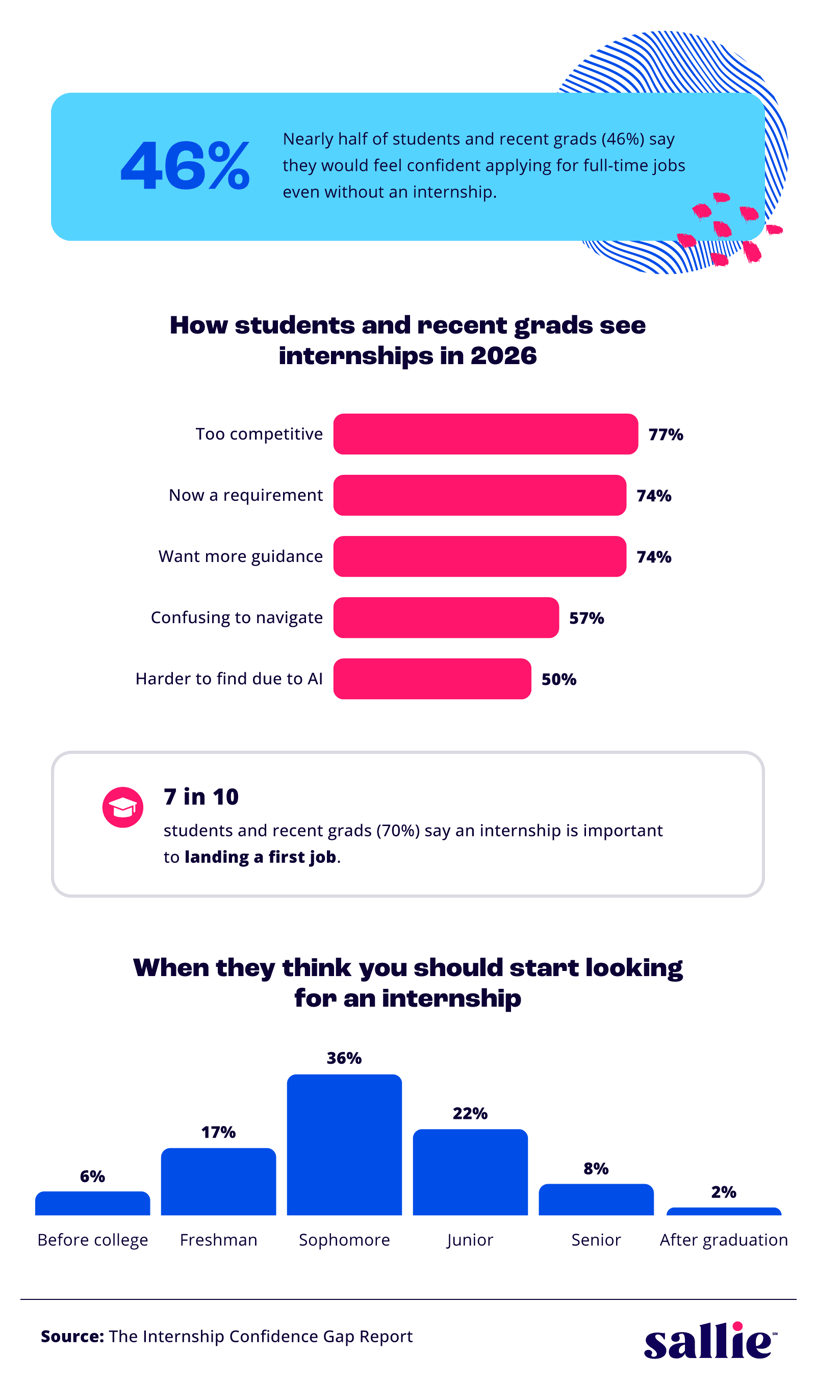
- Nearly half of students and recent grads (46%) say they would feel confident applying for full-time jobs even without an internship.
- More than 3 in 4 (77%) say getting a good internship has become too competitive.
- Nearly 3 in 4 (74%) say internships are becoming a requirement rather than an advantage.
- 7 in 10 (70%) say completing an internship is essential or very important to landing a first job, a view strongest among engineering students (84%) and lowest among arts and humanities students (43%).
- Nearly 3 in 5 (58%) say students should start looking for internships during sophomore year or earlier.
What students gain from their internships
For students who completed an internship, the experience often paid off. Many say it built their confidence and helped them feel more employable after graduation. How much internships pay varies more from student to student, from unpaid roles to hourly wages, salaries, and stipends.
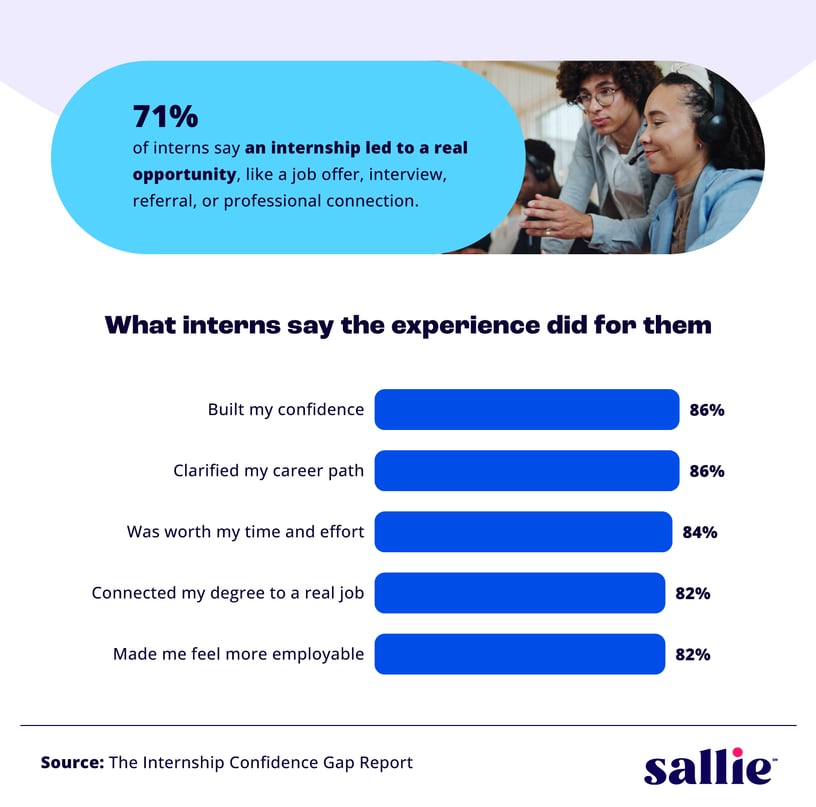
- Among those with internship experience, more than 7 in 10 (71%) say it led to a real opportunity, like a job offer, interview, referral, or professional connection.
- Nearly 9 in 10 interns say their internship built their confidence (88%) and clarified their career path (86%).
- More than 4 in 5 say an internship made them feel more employable after graduation (82%).
How internships pay, and what they cost
- Among those who interned, 1 in 3 (33%) worked unpaid, while about 2 in 3 (67%) were paid hourly, by salary, or through a stipend.
What makes internships feel out of reach
- More than half of students and recent grads (54%) say internships feel too competitive or hard to get accepted.
- Nearly half (47%) say low or no pay has made an internship feel out of reach or discouraging to them, and 43% say the same about not having the right personal connections.
- Nearly 3 in 4 (74%) wish they had more guidance on how internships work.
- About 1 in 3 students who took an unpaid or low-paid internship (34%) took on extra work, went into debt, or leaned on financial help to afford it.
How students find internships, and what they'd tell others
- More than half of interns (53%) found their internship through a school channel, such as a professor, advisor, or campus career center, ahead of job boards (33%).
- Top advice students would give about internships:
- Start looking earlier than you think you need to (24%)
- Network and reach out to people directly (20%)
- Use your school's career center and resources (15%)
Tips to help you land the right internship
Internships can help students feel more confident about their future, and a little preparation goes a long way. A few tips can help you find the right fit:
- Start your internship search early, since the best opportunities fill up fast.
- Get specific about what you want, from the season and field to the location, whether that's a summer internship or one during the school year. Both paid and unpaid roles are out there, and depending on your goals, either could be a good fit.
- Research the companies you're interested in, including their culture and whether any alumni work there.
- Build your network on LinkedIn and connect with people who may have a way in.
- Put together a resume that highlights your academic experience, paid and volunteer work, skills, and the clubs and organizations you're part of.
- Don't be shy about reaching out. Ask friends, family, professors, and anyone in your circle who might know someone at a company you're targeting.
- Tap into everything your school offers. Career centers, advisors, alumni networks, and recruiting events can point you to opportunities and connections you won't find on your own.
Sallie can help you prepare for what's next and go all in to get the most out of school. From finding scholarships to making a plan for college, Sallie is here to help you feel ready for every step ahead.
Methodology
Sallie surveyed 501 U.S. Gen Z college students and recent college graduates aged 18 to 25 in 2026 about their views on internships as part of the college experience. Respondents were asked about how confident they would feel entering the job market without an internship, how important internships are to landing a first job, when students should start looking, the barriers that make internships feel out of reach, what their own internship experience delivered, how they found it, whether it was paid or unpaid and how much, the debt or extra work they took on to afford one, and the advice they would give current students. The gender breakdown was 54% women, 41% men, 3% non-binary, and 1% who preferred not to say. All respondents were Gen Z, with a mean age of 21 years. Figures may not sum to 100% due to rounding.
About Sallie
Sallie is an education-solutions company that helps guide students and families through the entire higher-education journey with trusted tools, free-money-first support, and clear guidance from day one to done. Sallie helps students find scholarships, navigate financial aid, plan for college with Scout, and feel more confident about the steps ahead.
Fair use statement
The information in this article may be used for noncommercial purposes only. If you share it, please include a link and an attribution to Sallie.